Passing the Thread: How to Entrust Your Kashmiri Collection to the Generations That Follow
There comes a moment in the life of a serious collector when the pleasure of acquisition gives way to a quieter, more searching question: What becomes of all this? For those who have spent years — sometimes decades — assembling Kashmiri shawls, embroidered table runners, hand-knotted rugs, and hand-loomed pashmina throws, that question carries unusual weight. These are not merely decorative objects. They are the residue of extraordinary human effort, of traditions stretching back centuries along the banks of the Dal Lake and through the high valleys of the Himalayas. Deciding when and how to pass them on is, in its own way, an act of curation.
American collectors who have built meaningful Kashmiri holdings often find themselves caught between two impulses: the desire to preserve these pieces in ideal conditions, and the recognition that textiles held permanently in storage are textiles denied their purpose. The tension between preservation and use is, in fact, one of the oldest conversations in the world of heirloom stewardship — and with Kashmiri craft, it takes on particular nuance.
When a Textile Becomes a Family Narrative
Before any practical decision can be made, it is worth pausing on what a Kashmiri textile actually represents within a family context. Unlike a painting or a piece of furniture, a hand-embroidered shawl carries within its fibers an almost biographical intimacy. Someone wore it to a significant occasion. Someone draped it across a guest bed for a visitor who became a lifelong friend. Someone unwrapped it on a winter morning and understood, perhaps for the first time, what it meant to own something genuinely beautiful.
These accumulated associations transform an object. A sozni-embroidered pashmina that was purchased as an investment eventually becomes the shawl your mother wore at Thanksgiving, the one your daughter admired and then forgot she had admired until you reminded her years later. At that point, the textile is no longer simply an artifact of Kashmiri craftsmanship — it is a chapter in your family's story. Recognizing this shift is the first step toward thoughtful stewardship planning.
The Case for an Early Conversation
Many collectors defer the inheritance conversation until it becomes urgent, which is to say, until it becomes difficult. Estate attorneys and textile conservators alike will advise that the better approach is to begin the dialogue well before any transfer is necessary. This is not morbid planning — it is generous planning.
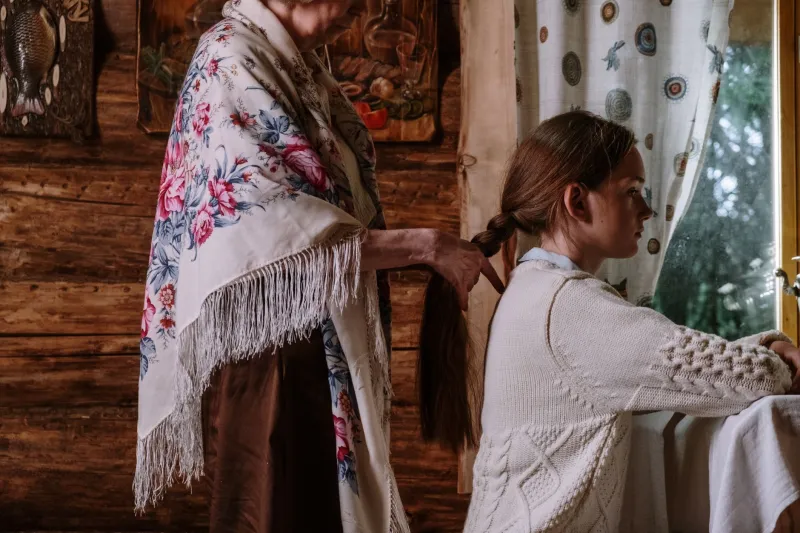
Start by involving younger family members in the collection itself. Invite a grown child or a niece or nephew to accompany you when you bring a piece out for airing. Explain the origin of a particular rug — the region, the weaving family if you know it, the technique that distinguishes it from machine-produced imitations. Share what drew you to it. This kind of informal transmission builds both knowledge and emotional connection, and it is the most natural form of textile education available.
When younger family members understand why a piece matters — not just that it is valuable, but that its value is rooted in irreplaceable human skill and cultural continuity — they are far more likely to care for it appropriately. A pashmina that arrives in a will as a line item is far more vulnerable to neglect than one that arrives as a story already half-known.
Gifting Versus Bequeathing: Practical and Emotional Distinctions
The choice between gifting a piece during your lifetime and bequeathing it through an estate has implications that are both financial and relational. From a tax perspective, gifting high-value textiles may have consequences worth discussing with a financial advisor, particularly if individual pieces have appreciated significantly. Kashmiri textiles — especially antique kani shawls and fine shahtoosh-era pashminas — have attracted serious collector attention in recent years, and their appraised values can be substantial.
Beyond the financial dimension, however, gifting carries a relational warmth that bequeathing cannot replicate. There is something irreplaceable about placing a carefully folded shawl into the hands of someone you love and saying, simply, I want you to have this now. It allows you to witness their response, to share the context of the piece in your own words, and to begin the mentorship of stewardship while you are still present to guide it.
Bequeathing, on the other hand, may be more appropriate for pieces whose full significance you want to document carefully — pieces that belong in a considered estate plan alongside written provenance notes, care instructions, and any appraisal records you have maintained.
Preparing a Collection for the Next Steward
Regardless of the method of transfer, preparation is essential. A Kashmiri textile collection passed on without documentation is a collection that has lost half its meaning. Consider assembling a simple archive for each significant piece: the date and source of acquisition, any known details about the artisan or region of origin, care and storage instructions, and your own notes on why the piece matters to you.
This need not be elaborate. A dedicated notebook, a folder of photographs, or even a series of recorded voice memos can serve the purpose. What matters is that the next custodian receives not just the object, but the context that makes the object legible.
Physical preparation is equally important. Before transferring any piece, have it professionally assessed by a textile conservator if you have not done so recently. Ensure that storage materials — acid-free tissue, archival boxes, cedar-lined chests — are in good condition. Brief the recipient on the specific vulnerabilities of their new holdings: that pashmina must never be hung on wire hangers, that embroidered pieces should be stored flat rather than folded along the same crease repeatedly, that silk-woven kani panels are sensitive to prolonged light exposure.
The Permission to Use
Perhaps the most important gift a collector can give alongside a Kashmiri textile is explicit permission to use it. There is a particular kind of paralysis that descends on people who inherit beautiful things — a reluctance to touch, to deploy, to risk. It is understandable, but it is also a quiet tragedy. A hand-loomed pashmina throw locked in a cedar chest for thirty years out of reverence is not being honored. It is being withheld from the world it was made to inhabit.
Kashmiri artisans do not weave in the abstract. They weave for warmth, for ceremony, for the intimate texture of a life well-furnished. When you pass a piece to the next generation, consider saying clearly: Use this. Bring it out. Let it be part of your home. Proper care and active use are not opposites. A textile that is handled with knowledge and attention will outlast one that is stored in anxious isolation.
A Living Legacy
The collectors who have contributed most to the preservation of Kashmiri craft are not those who have sealed their holdings behind glass. They are those who have made their collections part of a living conversation — with family, with guests, with younger generations who might not otherwise encounter the extraordinary depth of this tradition.
Passing on a Kashmiri collection is, in its finest expression, an act of cultural stewardship. It says: this matters, this craft deserves continuation, and I trust you to carry it forward. That trust, extended with knowledge and care, is perhaps the most enduring thing a collector can weave into the fabric of a family's history.