Slow by Design: How Kashmir's Master Artisans Are Defying the Pace of Modern Fashion
There is a particular kind of courage in choosing stillness when the world demands speed. In the workshops of Srinagar, in the quiet upper-story rooms of villages along the Jhelum River, Kashmir's most accomplished artisans are exercising precisely that courage — not as a romantic gesture toward the past, but as a calculated, deeply considered act of resistance against the forces that have flattened so much of the world's creative heritage into interchangeable product.
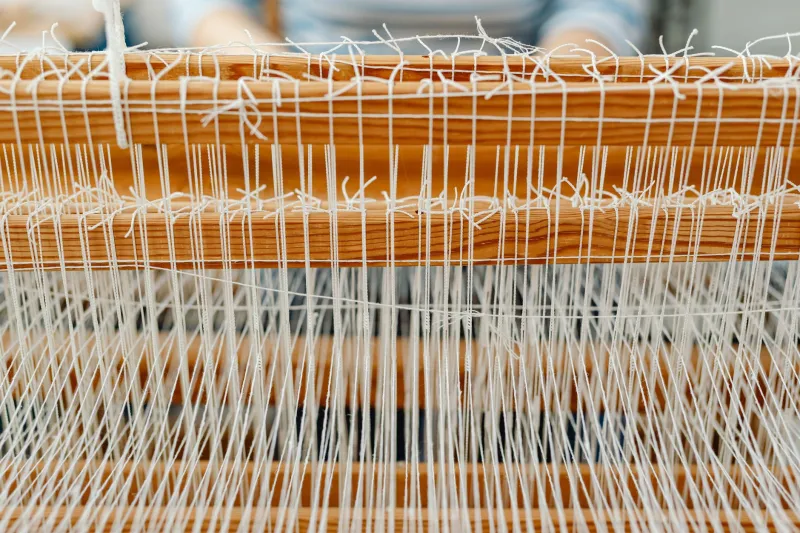
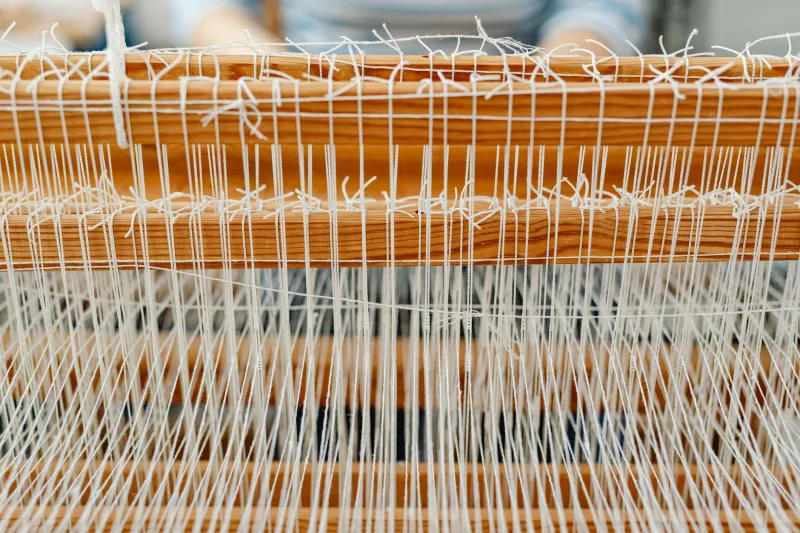
For the American collector accustomed to the rhythms of contemporary retail — where seasonal collections arrive before the previous season has concluded — the Kashmiri atelier operates on an entirely different calendar. A single Kani shawl, woven on a traditional loom with hundreds of individually threaded weft spools, may require six months to complete. A piece of fine Sozni embroidery, where a single needle traces motifs so intricate they seem drawn rather than stitched, can demand a year of sustained, daily labor. These are not production delays. They are the natural duration of the work itself.
The Economics of Refusal
To understand why Kashmiri artisans are choosing this path in an age when fast fashion's supply chains can deliver a printed textile to a warehouse shelf in weeks, one must first appreciate that this choice carries genuine economic risk. The global appetite for inexpensive, trend-responsive goods has hollowed out craft traditions on every continent. Kashmir has not been immune to that pressure.
Yet a growing cohort of master craftspeople — many of them inheritors of family traditions stretching back generations — have arrived at a shared conclusion: competing on speed is a contest they can never win, and attempting it would cost them the only thing that makes their work irreplaceable. What they produce is not merely a textile. It is a concentrated record of skill, patience, and cultural knowledge that no automated loom can replicate. The moment that distinction is compromised for the sake of volume, the work becomes something else entirely.
Master weaver Ghulam Hassan Bhat, whose family has produced Kani shawls in Kanihama for four generations, has spoken about this tension with characteristic directness. To rush the loom, he has explained, is to introduce error — not only technical error, but a kind of spiritual error. The pattern loses its coherence. The weaver loses the meditative engagement that separates a great shawl from a merely adequate one. The customer, even if they cannot articulate why, senses the difference when they hold the finished piece.
What "Slow" Actually Means in Practice
The language of the slow movement, so popular in American food and design culture over the past two decades, can obscure the specificity of what Kashmir's artisans are actually doing. This is not slowness as aesthetic affectation. It is slowness as technical necessity.
Consider the production of a traditional Pashmina shawl with Sozni hand embroidery. The raw fiber, sourced from the underbelly of the Changthangi goat at altitudes above 14,000 feet, must first be dehaired, washed, and spun — processes that cannot be meaningfully accelerated without degrading the fiber's legendary softness. The weaving itself proceeds at the pace of the weaver's hands and the constraints of the loom. Then the embroiderer receives the woven base and begins the months-long process of covering its surface with needle-worked florals, paisleys, and chinar leaf motifs, each stitch placed with an exactitude that has no shortcut.
At every stage, the artisan is not simply executing a pattern. They are making hundreds of micro-decisions — about tension, about color gradation, about the precise angle of a petal — that accumulate into the singular character of the finished piece. This is why two shawls made from the same pattern by the same workshop will never be truly identical. The human hand, working at human speed, introduces a variability that is not a flaw but the very signature of authenticity.
Cultural Preservation as Market Strategy
What is perhaps most striking about the current moment in Kashmiri craft is the degree to which artisans have begun to articulate their resistance to fast fashion's timeline not only in cultural terms but in market terms. They understand, with increasing sophistication, that the American collector seeking a meaningful acquisition is not shopping for novelty. They are shopping for permanence.
This insight has reshaped how many of Kashmir's most accomplished workshops approach their relationship with international buyers. Rather than attempting to produce more pieces to meet demand, they are producing the same number of pieces and investing more deeply in the story that surrounds each one — the provenance, the biography of the maker, the specific tradition from which a particular technique descends. A shawl becomes not merely a purchase but an acquisition with a documented history, something that can be passed down alongside the story of how and why it was chosen.
For American households that have grown increasingly conscious of the environmental and human costs embedded in fast fashion's supply chain, this framing carries considerable moral weight. A textile that took a year to make, produced by an artisan who was fairly compensated for their labor, made from a fiber harvested without harm to the animal that produced it, is the antithesis of the disposable garment. It is, in every sense, the opposite of what dominates the contemporary market.
The Collector's Role in This Resistance
It would be a mistake to position the Kashmiri artisan as the sole agent in this story. The American collector who chooses to acquire genuine handcrafted Kashmiri textiles is also making a choice — a choice to value depth over novelty, permanence over trend, and human skill over mechanical efficiency. That choice has consequences that extend far beyond the individual transaction.
When a collector in New York or San Francisco or Chicago brings a hand-embroidered Sozni shawl into their home, they are participating in an economic relationship that sustains a master embroiderer's livelihood, supports the training of apprentices who will carry the tradition forward, and sends a signal — however modest — to the broader market that there remains a constituency for work made with genuine care at the pace genuine care requires.
This is not a romantic notion. It is a practical observation about how craft traditions survive. They survive because people value them enough to pay for them, and because that valuation creates the economic conditions under which the next generation of artisans can afford to learn slowly, to work slowly, and to resist the pressure to become something cheaper and faster and ultimately forgettable.
Beauty as an Act of Defiance
Kashmir's master artisans are not naive about the forces arrayed against them. They understand the global marketplace. They have watched other regional craft traditions succumb to mechanization or dilution. Their choice to continue working as they have always worked — with full attention, at full depth, on the timeline the work itself demands — is not born of ignorance. It is born of conviction.
In that conviction, there is something that American collectors of discernment will recognize immediately: the same quality that distinguishes a thing worth owning from a thing merely worth buying. Call it integrity. Call it authenticity. Kashmir's artisans might simply call it the only way they know how to work — and the only work worth doing.