The Deliberate Hand: How Kashmir's Master Artisans Are Reclaiming the Value of Time
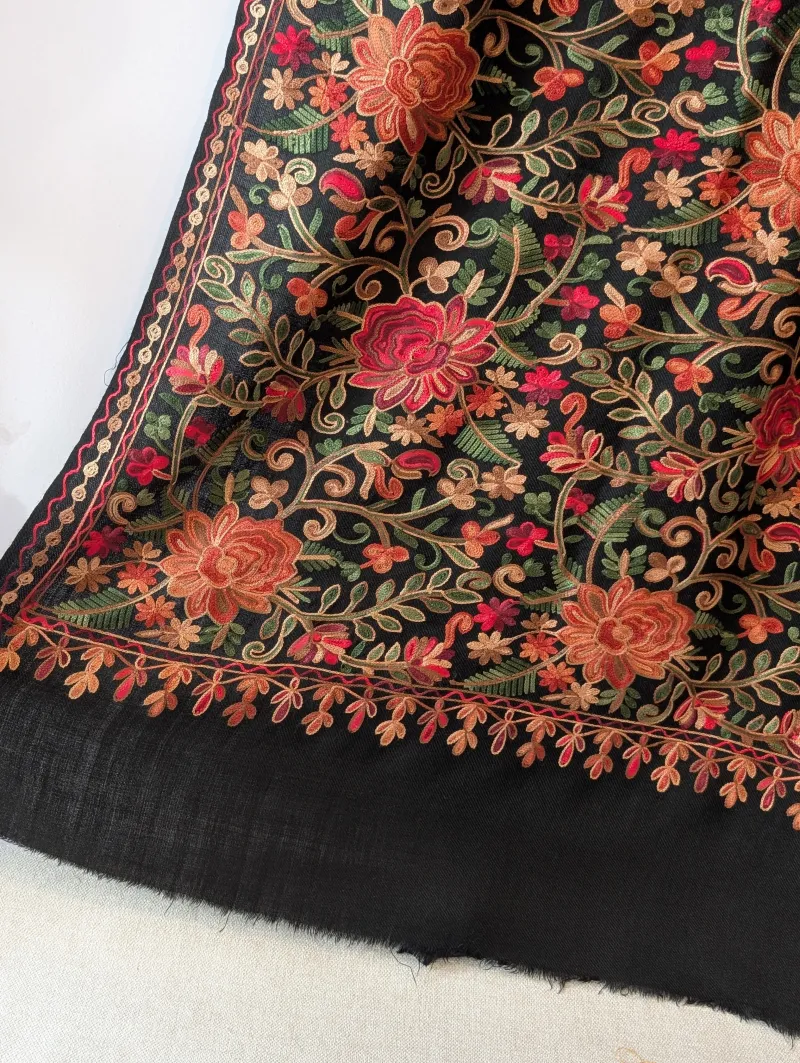
There is a particular kind of silence that settles over a Kashmiri workshop in the early hours of the morning. Before the markets open and the day's commerce begins, a master sozni embroiderer — perhaps the fourth in his family line to practice the craft — will take his seat, thread a needle with silk finer than a whisper, and begin. A single square inch of completed needlework may represent an entire day's labor. He does not rush. He has never rushed. And increasingly, the world is beginning to understand why.
In the contemporary West, speed has long been synonymous with progress. Fast fashion, rapid manufacturing cycles, and on-demand production have reshaped the global textile industry into something almost unrecognizable from the artisan traditions that preceded it. Yet in the mountain valleys of the Kashmir region, something quietly extraordinary is taking place: skilled craftspeople are not simply unable to match industrial pace — they are actively, philosophically uninterested in doing so.
A Conscious Refusal
To frame this as mere stubbornness or economic necessity would be to misread the situation entirely. Many of Kashmir's most accomplished weavers and embroiderers have had opportunities to introduce power looms, digitally guided jacquard machines, or factory-scale production into their practice. Some have watched neighboring workshops take precisely that route. The choice to decline is, for a significant number of master artisans, a considered one — rooted in a worldview that treats the making of an object as inseparable from the meaning it carries.
Mohammad Yusuf Bhat, a third-generation kani weaver whose family has produced twill-tapestry shawls for over sixty years, describes his craft in terms that would resonate deeply with any American who has found themselves craving stillness in a notification-saturated day. "When I sit at the loom," he has explained to visitors to his workshop, "my mind is not elsewhere. Every pass of the shuttle is a decision. You cannot make those decisions quickly and make them well. The shawl knows the difference."
This is not romantic mysticism. It is a technical reality. The kani weave — produced using small wooden spools rather than a continuous weft thread — requires the weaver to hold an entire design schematic in memory, executing sequences of color changes that can number in the thousands across a single piece. The cognitive engagement demanded by this process is, by any measure, profound. Automation can approximate the visual outcome. It cannot replicate the intention.
The American Collector's Awakening
Across the United States, a growing cohort of collectors and design-conscious consumers is arriving at a similar conclusion from a very different direction. The same digital environment that has accelerated commercial production has also, paradoxically, generated an intense appetite for objects that carry proof of human presence. Interior designers working with clients in cities from New York to San Francisco to Chicago report a marked shift in what their most discerning buyers are seeking: not simply beauty, but evidence of time.
This is a meaningful distinction. A digitally printed textile can be beautiful. A hand-embroidered Kashmiri shawl, by contrast, is beautiful and biographical — each irregularity in the needlework a record of a specific person, working in a specific place, on a specific afternoon. For collectors who spend their professional lives navigating frictionless digital interfaces, that biographical weight carries enormous emotional value.
Jennifer Calloway, an interior designer based in Boston who has incorporated Kashmiri textiles into several high-profile residential projects, puts it plainly: "My clients are sophisticated people who have access to everything. What they cannot easily access is something that took a human being six months to make. That scarcity is real, and it resonates."
Slowness as Spiritual Practice
For the artisans themselves, the philosophical dimension of their work extends beyond craft philosophy into something closer to spiritual discipline. Many of Kashmir's master weavers and embroiderers describe their daily practice in terms that parallel meditative traditions — a state of absorbed, present-moment focus that the Japanese concept of mushin (empty mind) or the Western psychological notion of "flow" might approximate, though neither quite captures it.
The namda felt-makers of the region, who compress raw wool into intricate floor coverings through a process of hand-rolling and fulling that can span multiple days, speak of the repetitive physical labor as a form of contemplative practice. The work quiets the mind precisely because it demands the body's full attention. There is no room in the rhythm of the craft for distraction.
This quality — what might be called the meditative integrity of the handmade — is increasingly legible to American buyers who have themselves explored mindfulness practices, yoga, or intentional living philosophies. The Kashmiri shawl draped across a reading chair becomes, in this context, not merely a decorative object but a daily reminder that certain valuable things cannot be hurried.
What Slowness Guarantees
Beyond philosophy, the practical consequences of this commitment to deliberate production are measurable. Pieces made through traditional, unhurried methods demonstrate structural and aesthetic qualities that accelerated manufacturing consistently fails to match. The natural lanolin retained in hand-processed pashmina fiber contributes to a softness that deepens rather than diminishes with age. The slight variations in tension across a hand-woven carpet create a visual depth — a quality of light-play across the surface — that machine regularity cannot produce.
For the American collector approaching Kashmiri textiles as long-term acquisitions, this matters practically. An authentic hand-embroidered sozni shawl, properly stored and occasionally aired, will outlast its owner. It is not a seasonal purchase. It is an inheritance.
A Counterculture Worth Collecting
There is something quietly radical about the Kashmiri artisan's relationship with time in the current moment. In a global economy that rewards velocity above nearly all other virtues, the decision to spend eight months on a single shawl is, in the most literal sense, a countercultural act. It is also, increasingly, a commercially resonant one — because the market for objects made with this quality of attention is not shrinking. It is growing.
For collectors who feel the weight of the digital age's relentlessness, the handmade Kashmiri textile offers something that no algorithm can curate and no factory can replicate: the tangible record of another human being's sustained, undivided attention. In that sense, every such piece is not merely a purchase. It is an invitation to slow down alongside the person who made it.