Beyond the Label: How Kashmiri Provenance Became the Ultimate Status Symbol for America's Most Discerning Collectors

There is a particular kind of confidence required to enter a room wearing something that carries no visible branding whatsoever — no monogram, no interlocking initials, no embossed house name stamped along the hem. It is the confidence of someone who does not need to be explained. Increasingly, that confidence is being expressed through Kashmiri textiles, and the collectors who have discovered this register of luxury are finding it nearly impossible to return to anything else.
The phenomenon known as "quiet luxury" has been discussed at length in American fashion and interior design circles over the past several years. But what began as a trend — muted palettes, understated silhouettes, the studied avoidance of conspicuous branding — has matured into something more substantive among a specific tier of collector. For this group, quiet luxury is not merely an aesthetic preference. It is a philosophical position, and Kashmiri provenance has become one of its most eloquent expressions.
The Limits of the Logo
For much of the late twentieth century, luxury in America was performed. A handbag announced its maker. A scarf declared its house. Status was communicated through recognition — the more instantly a piece could be identified by a passerby, the more effectively it fulfilled its social function. The logic was circular but self-reinforcing: visibility conferred value, and value demanded visibility.
That logic has begun to unravel among the country's most sophisticated consumers. "There's a fatigue with being a walking advertisement," observes one New York-based interior designer who works exclusively with high-net-worth residential clients. "My clients have the logos. They've had them for years. What they're looking for now is something that can't be bought simply by walking into a store — something that requires actual understanding to appreciate."
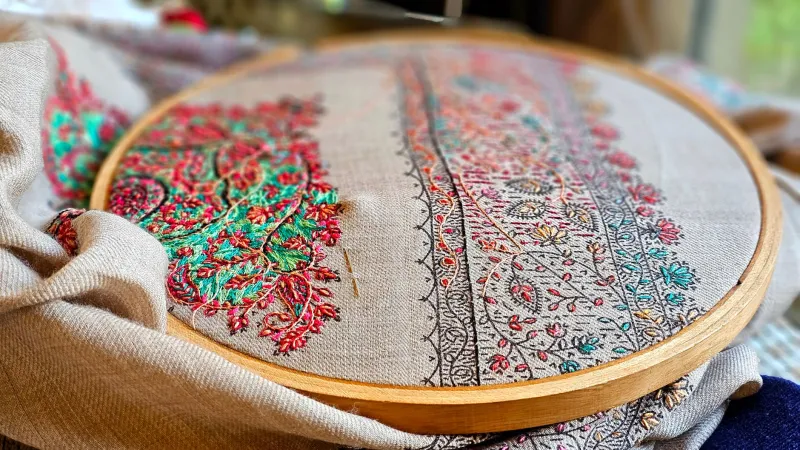
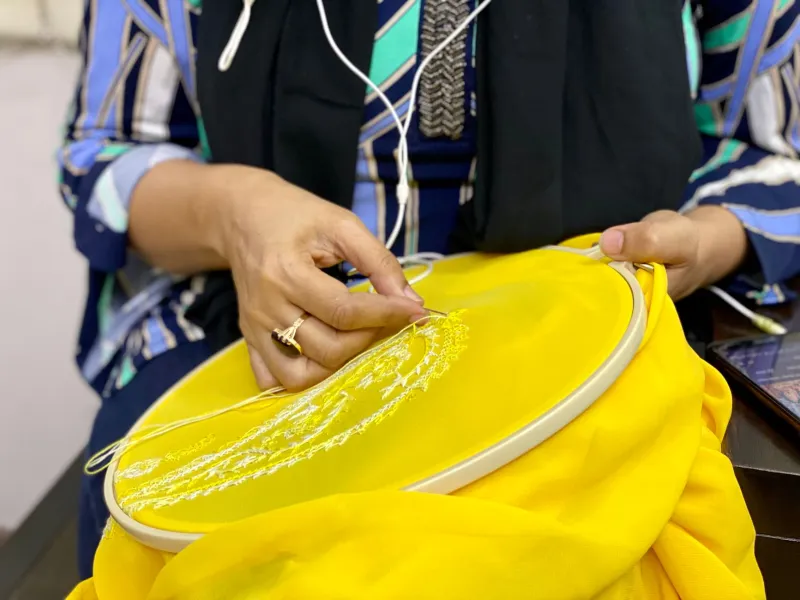
This is precisely the territory that authentic Kashmiri craft occupies. A hand-embroidered shawl produced through the centuries-old sozni technique — in which a single needle draws thread through fine pashmina with a precision measured in fractions of a millimeter — carries no label that announces its significance. Its significance is the technique itself. To recognize it is to already know something. And that knowledge, it turns out, is the most exclusive currency of all.
Provenance as Fluency
Collectors who have moved into Kashmiri textiles often describe the experience in terms that sound less like shopping and more like acquiring a language. The geography matters: the specific altitude of the Himalayan pastures where Changthangi goats produce their undercoat fiber, the mineral composition of the Dal Lake waters once used to wash finished shawls, the regional distinctions between kani woven work from Kanihama and the needle-worked traditions of Srinagar's old city. Each of these details is a word in a vocabulary that takes time to build.
"I spent about six months just reading before I bought anything," says a San Francisco-based technology executive who has assembled a collection of antique and contemporary Kashmiri shawls over the past decade. "By the time I made my first serious purchase, I understood what I was looking at in a way that most people in the room — including people who spent far more money on visible luxury — simply didn't. That asymmetry became part of what I valued about the whole endeavor."
This inversion — where knowledge confers more distinction than expenditure — represents a meaningful departure from conventional luxury logic. It also explains why Kashmiri pieces have found such a receptive audience among collectors who are, in many cases, already wealthy enough that spending is no longer a differentiator. What differentiates them now is what they know.
The Artisan's Signature, Embedded in Thread
One of the more striking aspects of authentic Kashmiri craft is the way in which individual artisan identity is encoded not in any external mark but in the work itself. A master embroiderer working in the aari chain-stitch tradition develops a personal rhythm, a particular tension in the thread, a characteristic approach to shading and gradation that experienced collectors and dealers can sometimes attribute to a specific hand or workshop. There is no signature in the conventional sense — and yet the work is signed, indelibly, by the choices made at every stage of its creation.
This embedded authorship resonates powerfully with collectors accustomed to the art world, where provenance documentation and connoisseurship have always been understood as distinct from mere price. "I think of my Kashmiri pieces the way I think about works on paper," explains a Chicago-based collector who divides her acquisitions between contemporary drawing and Kashmiri textiles. "The hand is present. You can feel the decisions that were made. That's not something you can manufacture at scale, and it's not something a logo can replicate."
Interior Design and the Language of Restraint
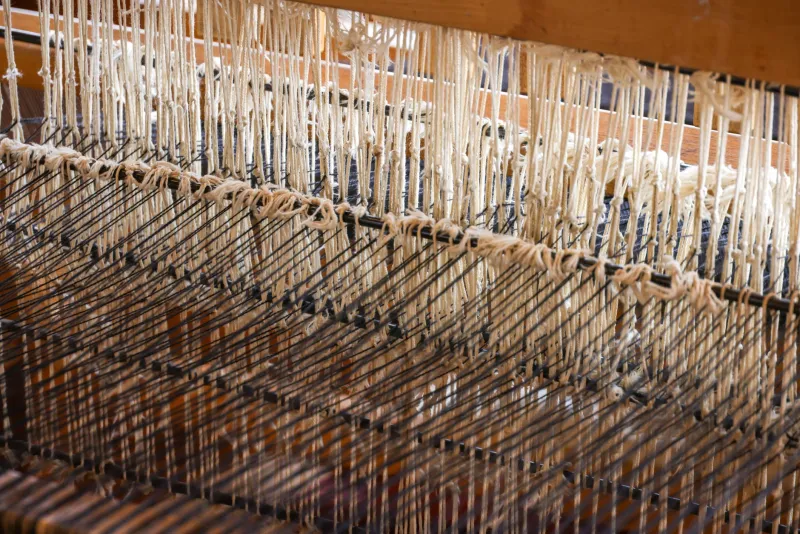
The shift is equally visible in American residential interiors. Luxury interior designers working at the highest tier of the market report a pronounced move away from the ostentatious deployment of recognizable brands toward spaces that communicate sophistication through material quality, historical depth, and geographic specificity. In this context, a jamawar woven textile panel, a hand-knotted carpet from the Kashmiri valley, or a set of embroidered cushion covers produced by a multi-generational family workshop carries precisely the kind of layered meaning that their clients are seeking.
"When a guest asks about a piece and the answer takes ten minutes to tell properly — the region, the technique, the family who made it, the years it took — that's a different kind of conversation than pointing to a logo," notes a Los Angeles-based designer whose residential projects have increasingly incorporated Kashmiri textiles as focal elements. "It's a conversation about the world. About history. About what it means to value something for reasons that go beyond marketing."
Collecting with Intention
For those entering this space, provenance-driven collecting requires a different kind of due diligence than conventional luxury purchasing. Authenticity verification, an understanding of regional technique distinctions, and relationships with reputable sources who can document the origin and production of individual pieces are all essential components of a considered collection. The reward, collectors consistently report, is a relationship with objects that deepens rather than diminishes over time — pieces that yield new details on closer examination, that carry histories worth telling, and that connect their owners to a living craft tradition of extraordinary depth.
The quiet luxury revolution, at its most considered, is not simply a rejection of logos. It is an affirmation that the most meaningful objects are those whose value is inseparable from the human effort, geographic specificity, and accumulated knowledge embedded in their making. Kashmir's artisan traditions have embodied that principle for centuries. That American collectors are now arriving at the same conclusion feels less like a trend than a recognition — long overdue, and entirely welcome.