What the Needle Knows: How Kashmiri Craftsmanship Is Teaching Americans to Reclaim Quiet
There is a particular quality of attention that exists in a Kashmiri craftsman's workshop at midmorning. Not the aggressive, managed focus of a productivity technique or a guided meditation app, but something older and less performative — a silence that has been earned through repetition, refined across generations, and ultimately woven into the fabric itself.
For the artisans of the Kashmir Valley, quietude is not a luxury or a wellness trend. It is a professional requirement.
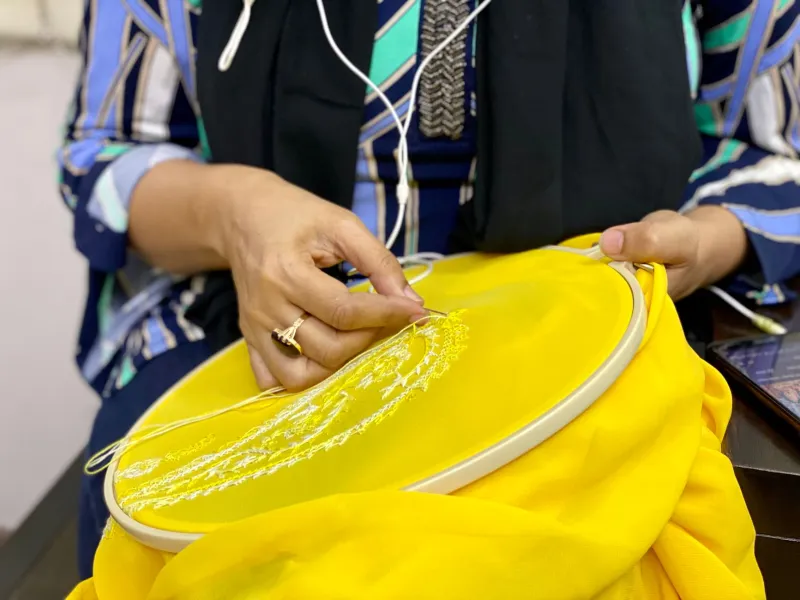
"When I am working on a tilla embroidery, the room must be still," explains Mohammad Yusuf, a master zari craftsman from Srinagar whose family has practiced the art of metallic thread embroidery for four generations. "Not because noise breaks my concentration in a simple way — but because the work requires you to hear something. The tension of the thread. The give of the fabric. You cannot hear that if the world is shouting."
This attentiveness — what some textile scholars describe as a form of embodied listening — is increasingly attracting the notice of American collectors who encounter it not as an abstract idea but as a tangible, transferable quality present in the finished objects themselves.
An Object That Carries Its Own Atmosphere
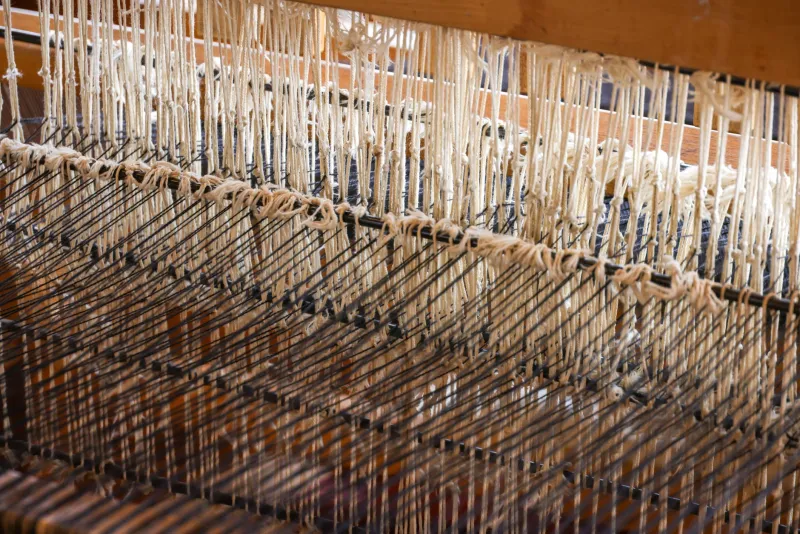
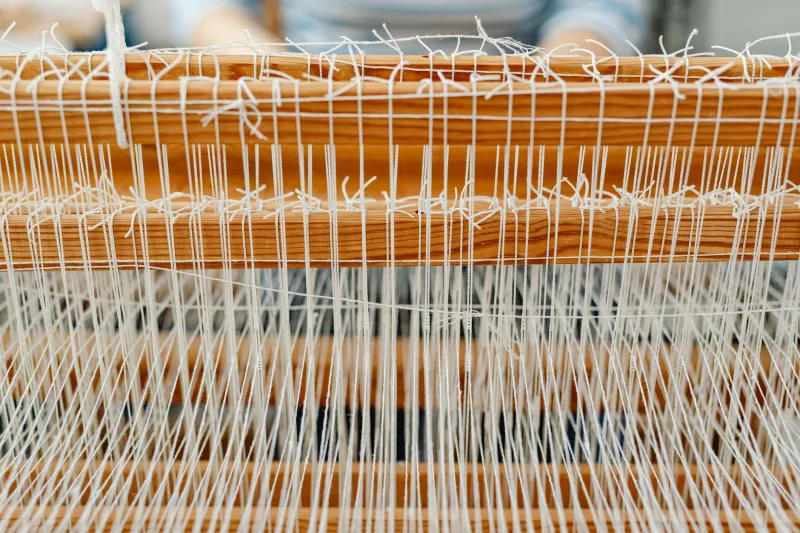
The relationship between handcraft and silence is not incidental. It is structural. A single Pashmina shawl featuring traditional sozni embroidery may require upward of six months of continuous work. A fine Kani weave, in which the pattern is formed by dozens of individually managed wooden spools rather than a mechanized Jacquard system, demands a level of sustained concentration that effectively prohibits distraction. The craftsperson cannot check a phone. Cannot half-listen to a podcast. The work refuses divided attention.
What this means, in practical terms, is that the finished object has been in the company of sustained human focus for an extraordinary length of time. Many collectors describe sensing this, even before they understand its source.
Diana Mercer, a collector based in Portland, Oregon, who has been acquiring Kashmiri pieces for nearly a decade, recalls the moment she first understood what she was responding to. "I had been in a particularly chaotic stretch at work — back-to-back video calls, constant messages, the usual. I came home and sat with a new Kani shawl I had just received. I wasn't doing anything with it. I just held it. And I noticed that my breathing had slowed. That I had stopped rehearsing my to-do list in my head." She pauses. "I started paying attention to what was in front of me instead of what was ahead of me. That felt significant."
The Discipline Behind the Quiet
To understand what collectors like Mercer are responding to, it helps to understand the training that precedes any finished Kashmiri textile. Apprentices in traditional embroidery workshops — known as karkhanas — typically begin their education in adolescence and spend years mastering individual stitches before they are permitted to work on a piece intended for sale. The sozni stitch, for instance, produces a fine, double-sided embroidery so precise that the reverse of the fabric is nearly indistinguishable from the front. Achieving this requires not merely technical skill but a quality of presence that experienced artisans describe as inseparable from the physical act of listening.
"We say the needle speaks to the cloth," says Fatima Bano, a sozni embroiderer from the Budgam district whose workshop employs twelve women, several of whom are her daughters and nieces. "But first the needle must be quiet enough to hear the cloth speak back. You learn to feel the resistance. The acceptance. Every fabric has a different voice."
This vocabulary — of listening, of voices within materials, of conversation between craftsperson and medium — recurs with striking consistency among Kashmiri artisans across disciplines. It is not metaphorical embellishment. It describes a genuine perceptual practice, one that has been refined over centuries and passed down not through written instruction but through proximity, imitation, and years of supervised silence.
When the Object Comes Home
For American collectors navigating lives saturated with digital stimulus, the encounter with a Kashmiri textile can function as something of an interruption — and not an unwelcome one. Several collectors interviewed for this piece described a shift in their domestic environments following the acquisition of significant Kashmiri pieces, not because they made any conscious effort to change their habits, but because the objects themselves seemed to exert a kind of gravitational pull toward stillness.
James Whitfield, an architect in Chicago who collects Kashmiri rugs and durries, describes it this way: "I have a room in my apartment where I keep the pieces I consider most important. I don't have a television in that room. I didn't plan it that way — it just felt wrong to have one there. The rugs changed what the room wanted to be."
This experience — of an object reshaping its environment rather than merely occupying it — is consistent with what textile historians observe about heirloom-quality handcraft more broadly. Objects made with profound attention tend to invite attention in return. They are not passive. They make demands of the spaces and people around them, quietly but persistently.
A Counterweight to the Noise
The broader cultural context matters here. Americans are, by most measures, living through an unprecedented crisis of attention. Researchers at institutions including the University of California, Irvine, have documented the degree to which constant digital interruption fragments cognitive focus, elevates stress hormones, and diminishes the capacity for sustained, reflective thought. The consequences extend beyond productivity into quality of life, relationships, and the ability to experience what psychologists call "absorbed engagement" — the state of being fully present with a single object, task, or person.
Kashmiri textiles, made precisely through absorbed engagement and carrying its traces in every stitch, offer something that no amount of digital detox programming can fully replicate: a physical, tactile encounter with the results of sustained human attention. They are, in a very literal sense, proof that such attention is possible — and that it produces something worth having.
"I think what people are responding to, even if they don't name it this way, is the evidence of a mind that stayed," says Dr. Sarah Okonkwo, a cultural anthropologist at a New England university who studies the relationship between material culture and contemporary well-being. "In a world where everything is optimized for speed and distraction, an object that required someone to be fully present for six months is almost radical. It's a different kind of testimony."
Learning to Listen Again
Mohammad Yusuf, asked what he would want American collectors to understand about the objects they bring into their homes, is quiet for a moment before answering. "I would want them to know that the silence is in there," he says. "Not as a feeling, but as a fact. Every hour I sat with that piece, the quiet sat with me. When you hold it, you are holding that too."
For those accustomed to measuring value in specifications, thread counts, and provenance certificates, this may seem like an unusual proposition. But for a growing community of American collectors who have experienced the particular quality of presence that a genuine Kashmiri textile introduces into a room, it is perhaps the most accurate description of what they paid for — and what they keep returning to.
Not an object, precisely. An invitation back to themselves.