The Productive Power of Stillness: What Kashmiri Artisan Studios Can Teach Overworked Americans
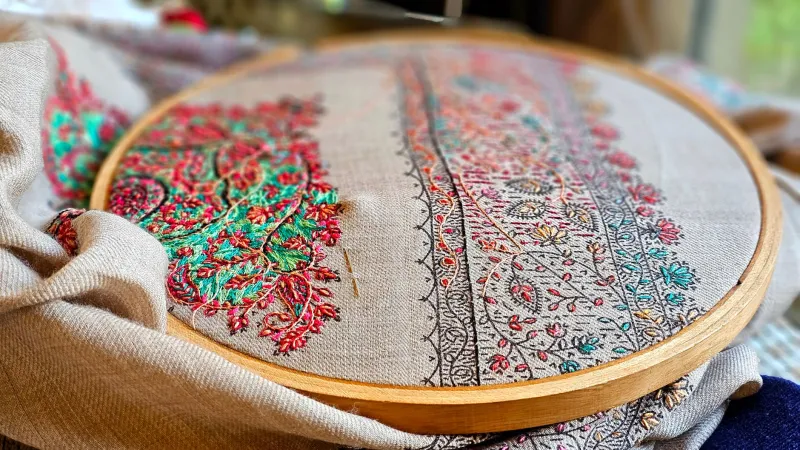
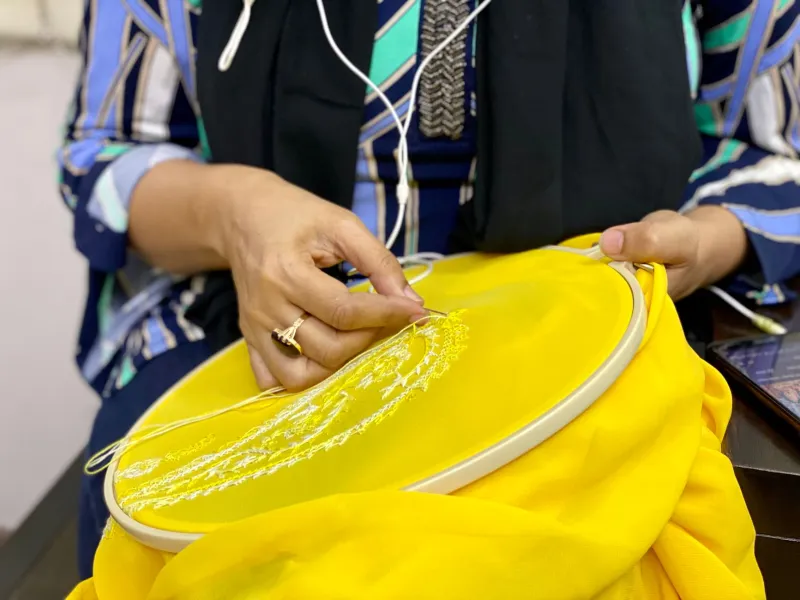
Somewhere in the old quarters of Srinagar, a craftsman sits before a stretched length of pashmina. The room holds perhaps three other workers. No music plays. No one checks a phone. The only sound is the faint percussion of a needle drawing thread through wool so fine it barely registers against the fingertip. An hour passes. Then another. What accumulates in that time is not merely embroidery — it is a form of concentrated intelligence that the modern American workplace has almost entirely forgotten how to produce.
We have built an entire economy around the appearance of effort. Packed calendars, open offices engineered for collision, the tyranny of the always-available inbox — these are the hallmarks of a professional culture that prizes motion over meaning. Yet the evidence continues to mount that our most demanding cognitive work — the kind that produces genuine innovation, lasting craft, and original thought — requires precisely the conditions that Kashmiri artisans have protected for centuries: silence, solitude, and the freedom to go slowly.
The Studio as a Philosophy
To visit a traditional Kashmiri needlework studio is to step into a philosophy made physical. The arrangement of such spaces is not accidental. Artisans sit at deliberate distances from one another, close enough for occasional quiet consultation, far enough that each worker inhabits a private sphere of concentration. Natural light falls from high windows. The temperature is kept cool. There is no foreman pacing the floor with a clipboard.
This environment is the product of generations of refinement, shaped not by management theory but by the demands of the work itself. Kashmiri sozni embroidery — the painstaking needle technique that produces the fine floral motifs adorning genuine shawls — requires a quality of attention that cannot be switched on and off between meetings. A single motif may demand hundreds of individual stitches, each placed with a precision that varies by a fraction of a millimeter. The hand must know what the eye has already memorized. The mind must be present in a way that multitasking structurally prevents.
The studio, then, is not merely a place of production. It is a carefully maintained container for a particular quality of thought.
What Silence Actually Does to the Brain
American professional culture tends to treat silence as a void — something to be filled, a signal of inefficiency or social discomfort. The open-plan office, now the dominant architectural form in corporate America, was designed on the premise that proximity breeds collaboration. What decades of research have since demonstrated is that it more reliably breeds distraction, stress, and the shallow processing of information.
Neuroscientists studying attention have confirmed what Kashmiri craftspeople have long known through practice: the brain requires uninterrupted stretches of quiet to consolidate learning, form novel associations, and produce work of genuine depth. The moments between active tasks — what researchers sometimes call the default mode network's engagement — are not wasted time. They are when the mind integrates, connects, and creates.
In a Kashmiri embroidery workshop, those moments are honored rather than colonized. A craftsman who pauses to rest his eyes is not being unproductive. He is allowing the hand's muscle memory to settle, the eye's fatigue to ease, and the mind's associative capacity to do its quiet work. The pause is not the enemy of the output. It is, in a very real sense, part of the method.
The Hustle Myth and Its Costs
The American hustle narrative — the glorification of the overworked founder, the 4 a.m. alarm clock, the badge of honor worn by those who claim to sleep least — has produced a generation of professionals who are exhausted, frequently distracted, and increasingly estranged from any sense that their work carries intrinsic meaning. Burnout rates across knowledge industries have reached levels that health researchers now describe as epidemic. Creativity scores, by several longitudinal measures, have declined among American adults since the 1990s.
None of this is coincidental. When the body is chronically stressed and the mind is never permitted to be idle, the cognitive architecture required for original thought begins to erode. We produce more output — more emails, more deliverables, more content — while generating less of genuine value. The Kashmiri master who spends eight months completing a single kani woven shawl is not, by any reasonable measure, less productive than the American knowledge worker who clears a hundred tasks in a week. He is producing something irreplaceable. The knowledge worker, very often, is producing something forgettable.
Deliberate Rest as a Professional Practice
The rhythm of a traditional Kashmiri workshop includes structured intervals of rest that would appear radical to most American managers. Artisans take genuine breaks — not the performative desk-lunch of the modern office, but actual periods of disengagement from the work. Tea is prepared and consumed without screens. Conversation, when it occurs, is unhurried. These intervals are not inefficiencies to be engineered away; they are load-bearing elements of the creative process.
This pattern mirrors what researchers studying elite performers in fields from music to mathematics have observed: the highest-achieving practitioners do not work longer hours than their peers. They work in more concentrated bursts, protect their recovery time with unusual discipline, and resist the cultural pressure to perform busyness as a proxy for quality.
For American professionals seeking to reclaim this rhythm, the Kashmiri model suggests a few concrete principles. Begin with protected blocks of uninterrupted time — two hours, ideally, with all notifications disabled. Treat the end of such a block not as failure but as completion. Build genuine rest into the workday rather than permitting the day to be one long, undifferentiated stream of partial attention. And resist the impulse to measure the value of your work by its volume.
What the Textile Teaches
There is something instructive about the fact that Kashmir's most celebrated textiles are also among the world's most labor-intensive. A fine sozni shawl, worked by a single artisan over the better part of a year, commands prices that reflect not merely the cost of materials but the accumulated depth of attention embedded in every centimeter of its surface. Collectors who acquire such pieces often speak of a quality they find difficult to articulate — a kind of presence in the object, a sense that it holds something more than pattern.
What they are perceiving, in part, is the residue of sustained, unhurried attention. Work produced under conditions of genuine focus carries a different quality than work assembled under pressure. This is not mysticism; it is craft understood at its most fundamental level.
The American professional who wishes to produce work of comparable resonance — whether they are designing software, writing briefs, counseling clients, or leading organizations — might find the most useful model not in the latest productivity framework but in the quiet discipline of a Kashmiri workshop, where the silence between stitches is understood to be as essential as the stitches themselves.
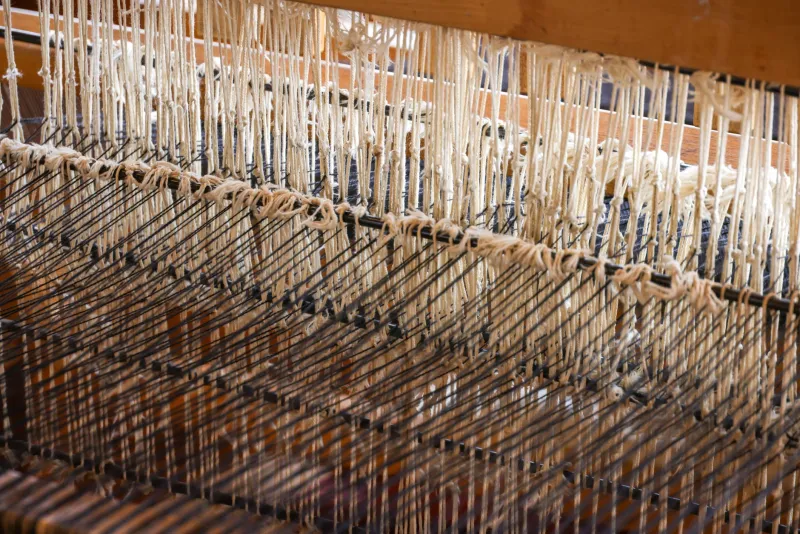
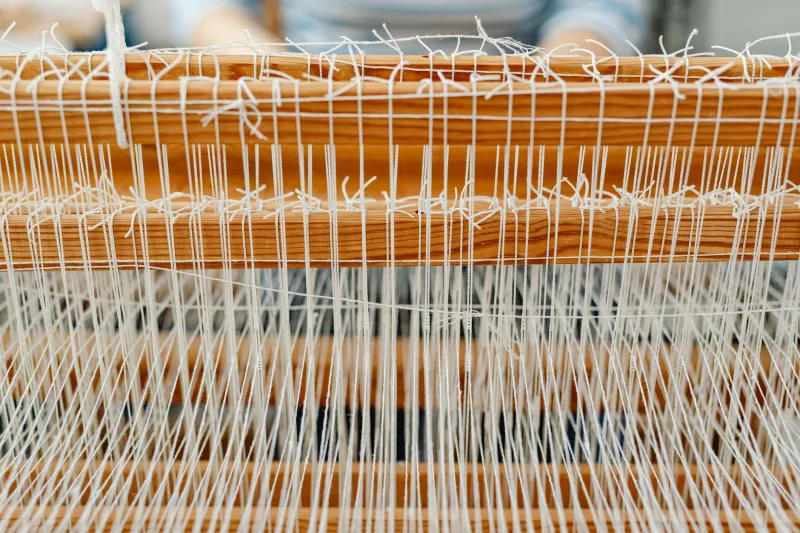
At House of Kashmir, we believe that the textiles we offer are more than objects of beauty. They are evidence of what becomes possible when a culture decides, collectively, that depth is worth the time it demands. That is a lesson with implications far beyond the loom.