When a Room Begins to Speak: How Kashmiri Textiles Invite the Stories Guests Cannot Stop Asking About
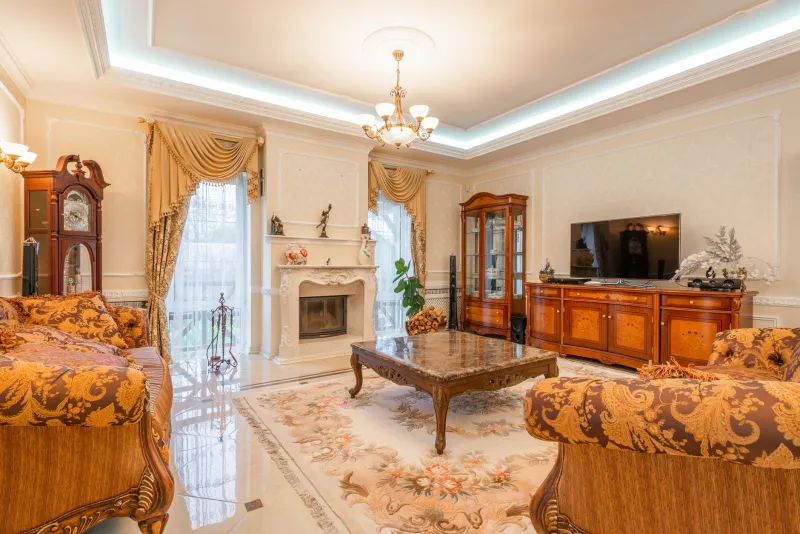
There is a particular moment that many collectors of Kashmiri textiles will recognize. A guest arrives, moves through the entry hall, and stops. Their eyes settle on something — a hand-embroidered shawl draped across a chair, a silk carpet anchoring the living room, a sozni-worked table runner catching the afternoon light. They lean closer. They reach out, almost involuntarily, and then catch themselves. And then they ask: Where did this come from?
That question is not incidental. It is, in many ways, the entire point.
Authentic Kashmiri craft does not simply decorate a space. It animates it. Each piece carries within its construction a layered biography — of the region that produced it, the artisan who shaped it, the tradition that informed every decision about color, motif, and technique. When such an object is placed thoughtfully in an American home, it becomes something that interior designers rarely account for in their floor plans: a genuine conversation.
What Makes These Objects Different
Most decorative items in a home are, at their core, products. They were manufactured to a specification, finished to a standard, and shipped to fill a space. They may be beautiful. They may even be expensive. But they do not have a story that belongs exclusively to them.
Kashmiri textiles are categorically different. A single kani shawl — woven on a twill-tapestry loom using a technique that dates back several centuries — may represent six months of a single weaver's labor. The geometric motifs encoded in its border are not decorative choices in the modern sense; they are a visual vocabulary with roots in Mughal court culture, Persian garden symbolism, and the specific design traditions of the Kashmir Valley. The wool itself, if genuine pashmina, was combed from the underbelly of Changthangi goats grazing at elevations above fourteen thousand feet.
This is not marketing language. It is provenance. And provenance, when shared with warmth and specificity, transforms a beautiful object into an unforgettable one.
Anecdotes from the Collection
Margaret, a collector based in Savannah, Georgia, describes the evening she first understood what she had acquired. She had placed a large hand-knotted Kashmiri carpet in her dining room shortly before hosting a dinner party. A guest — an architect with no particular interest in textiles — spent the better part of an hour on the floor after dinner, tracing the central medallion with his finger while she explained that the pattern was a stylized rendering of the chinar leaf, the iconic maple-like tree that lines the lakes of Srinagar.
"He called me two weeks later," she says, "to tell me he had been thinking about it ever since. Not about the carpet exactly, but about the idea that something so precise and so beautiful had been made entirely by hand, in a place he had never thought to consider."
In Portland, Oregon, a collector named David recounts a similar experience with a pashmina shawl gifted to his wife. At a gathering of colleagues, the shawl prompted a conversation that moved from the climate of the Himalayas to the economics of artisan labor to the broader question of what it means to own something genuinely irreplaceable. "It became a two-hour discussion," he recalls. "Nobody planned it. The shawl just opened the door."
These are not exceptional anecdotes. They are, among collectors of serious Kashmiri work, entirely ordinary ones.
The Art of Sharing Provenance
Knowing the story behind a piece is one thing. Sharing it gracefully is another. There is a meaningful difference between reciting facts and offering an invitation — between performing knowledge and genuinely welcoming someone into a conversation.
The most effective approach, experienced collectors suggest, begins with restraint. Do not volunteer everything at once. Allow the guest to respond to the object on their own terms first. If they express curiosity, offer a single, vivid detail rather than a comprehensive history. The information about the artisan's name, the village of origin, the months of labor — these can be offered in sequence, each one deepening the guest's engagement rather than overwhelming it.
When possible, connect the story of the piece to something the guest already cares about. For a guest interested in sustainability, the conversation might begin with natural dyes derived from walnut husks and indigo plants. For someone drawn to architecture, the structural logic of a carpet's border and field relationship may be the most resonant entry point. For a guest with an interest in history, the Mughal patronage that elevated Kashmiri weaving to an imperial art form offers an immediate narrative anchor.
The goal is not to educate. It is to share something that genuinely moves you — and to trust that the authenticity of that feeling will be more compelling than any amount of information alone.
Placement as Preparation
The physical placement of a Kashmiri textile within a room is itself a form of storytelling. A piece positioned where it can be seen clearly, touched easily, and examined closely is far more likely to invite engagement than one relegated to a wall or corner where it functions as background.
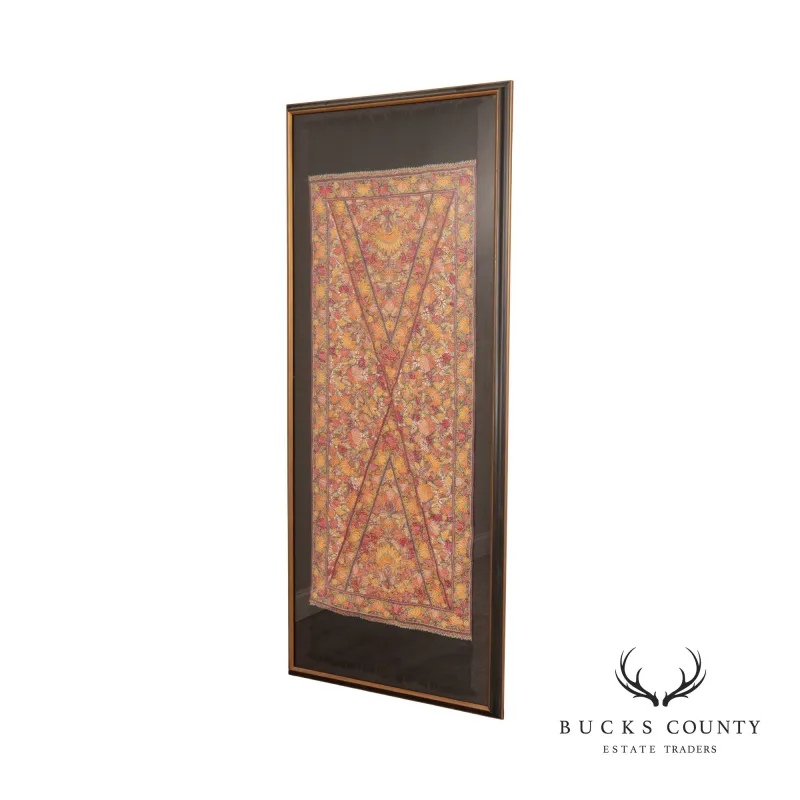
Consider the difference between a hand-embroidered cushion cover placed on a chair where guests will sit, and the same piece framed behind glass. One invites touch and proximity; the other communicates that the object is to be admired from a distance. For pieces that can bear handling — most shawls, throws, and cushion covers — accessibility is an asset.
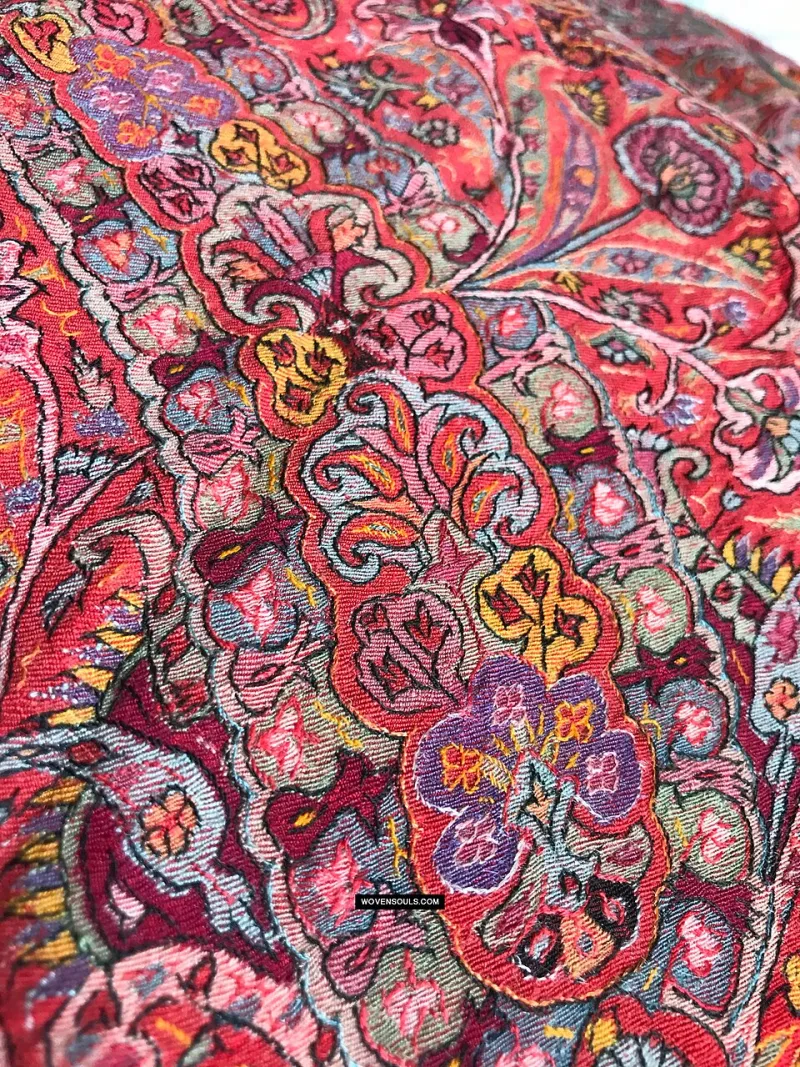
Lighting matters as well. Kashmiri embroidery, particularly the fine chain-stitch work of the crewel tradition or the needle-point precision of sozni, reveals its complexity under warm, directional light. A piece that appears flat under overhead fluorescents will show an entirely different depth of texture when lit from the side. This is not merely an aesthetic consideration — it is a practical one. The more a guest can see the work, the more naturally their curiosity will surface.
Building a Home That Speaks
For collectors who have lived with Kashmiri textiles over time, the cumulative effect of several pieces in a single home is something that goes beyond decoration. Rooms begin to carry a coherence that guests sense before they can articulate it — a quality of attention, of intentionality, of care for things that were themselves made with extraordinary care.
This is the deeper promise of collecting at this level. The pieces you acquire are not merely beautiful objects. They are the physical record of a living tradition, made by artisans whose names and villages and techniques deserve to be spoken aloud in rooms far from the Kashmir Valley. When your guests ask about what they are seeing, they are offering you a rare opportunity: to bring those artisans into the room, to give their labor a voice, and to make the distance between a Himalayan workshop and an American dining table feel, for a moment, very small indeed.
That is what a true conversation piece does. It does not merely start a conversation. It changes the one having it.