The Art of the Gathering: How Kashmiri Textiles Transform a Room Into a Story Worth Telling
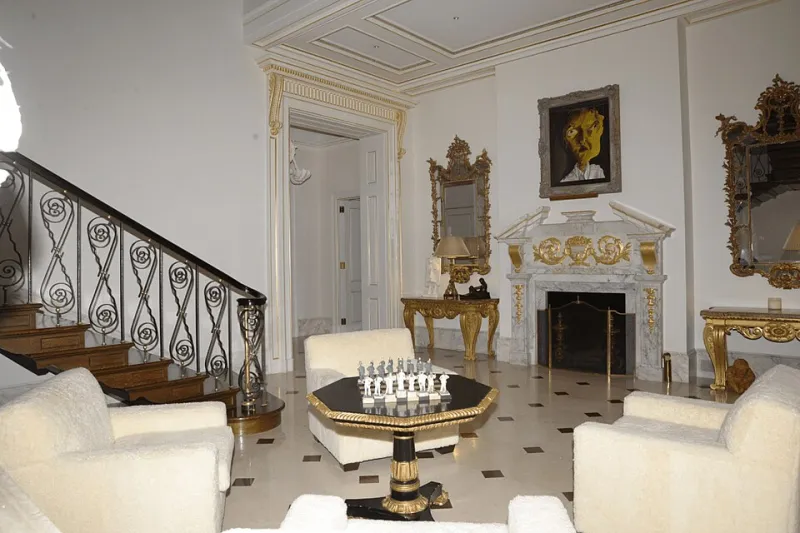
Photo: Federal Bureau of Investigation, Public domain, via Wikimedia Commons
There is a particular kind of silence that falls over a room when a guest reaches out to touch something they cannot quite explain. A hand moves toward the surface of a textile draped across an armchair — drawn by some instinct older than etiquette — and in that moment, before a single word is spoken, a conversation has already begun.
This is the quiet power that authentic Kashmiri textiles bring to the American home. For a growing community of collectors and hosts who understand that meaningful entertaining goes well beyond the menu or the wine list, these pieces have become something far more valuable than décor. They are, in the truest sense, social instruments.
Beyond Aesthetics: The Object That Earns Its Place
In the world of high-end interior design, the phrase "conversation piece" is used so freely that it has nearly lost its meaning. A sculptural lamp, an oversized abstract canvas, a reclaimed wood coffee table — all may earn the label, yet few genuinely provoke the kind of sustained, curious dialogue that a hand-embroidered Kashmiri shawl or a centuries-old carpet pattern can inspire.
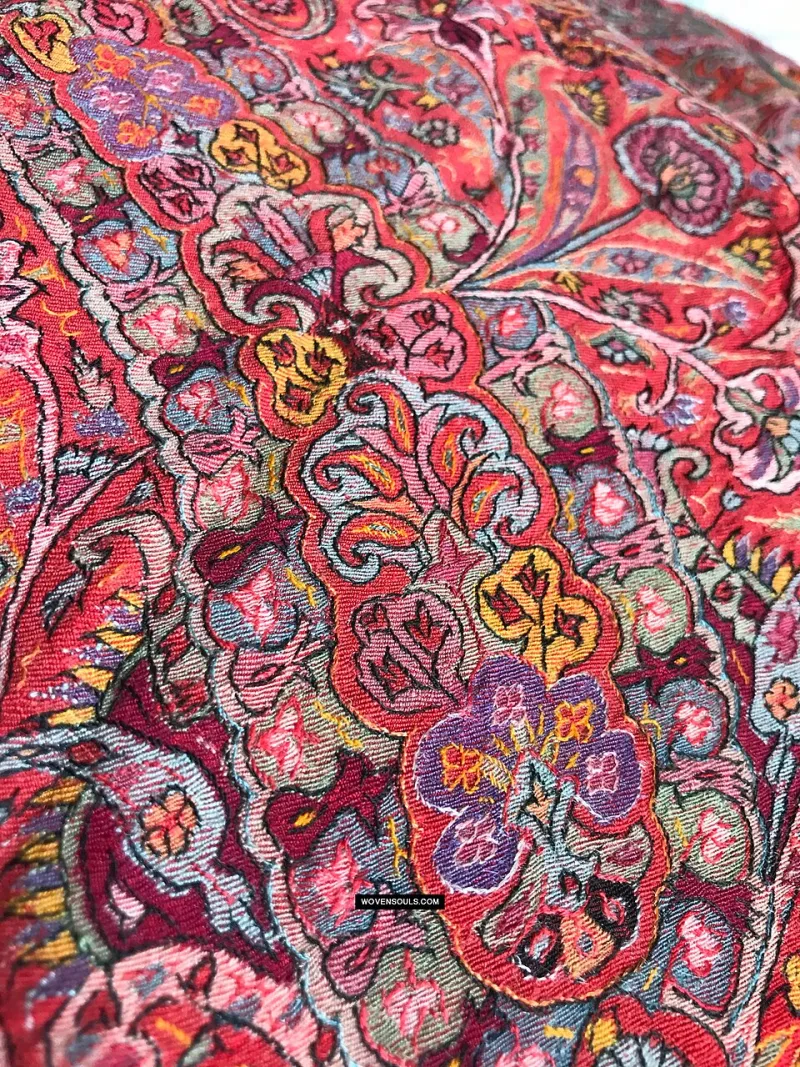
What distinguishes a Kashmiri textile from other statement objects is its layered legibility. A guest with no knowledge of South Asian craft history can still perceive that something significant is present. The density of the needlework, the particular warmth of the natural dyes, the faint asymmetry that signals a human hand rather than a machine — these qualities communicate authenticity even before the host has offered a single word of context. The object does its own introductory work.
For hosts who entertain frequently and thoughtfully, this self-narrating quality is extraordinarily useful. A well-placed piece does not require explanation; it invites inquiry. And inquiry, in the hands of a knowledgeable collector, opens into something genuinely enriching for everyone in the room.
The Host as Custodian and Narrator
There is a role emerging among America's most culturally engaged homeowners — one that sits somewhere between collector, educator, and ambassador. These are individuals who do not simply acquire beautiful things; they acquire stories, and they understand that the dinner table or the drawing room is among the finest venues for sharing them.
Consider what an authentic Sozni-embroidered pashmina shawl carries within its threads: the name of a craft tradition refined over five hundred years in the Kashmir Valley, the specific geography of a region whose elevation and climate produce the world's finest underfleece, and the biography of a craftsperson who may have spent the better part of a year completing a single piece. When a host can speak to even a portion of this history — with genuine knowledge rather than rehearsed talking points — the effect on a gathering is remarkable. Guests who arrived expecting a pleasant evening leave with a widened sense of the world.
This is the kind of hospitality that leaves a lasting impression. Not the perfection of the table setting, but the generosity of genuine knowledge shared in good company.
Placement as Intention
For those new to integrating Kashmiri textiles into an entertaining space, the question of placement deserves careful consideration. These are not objects to be hidden in secondary rooms or reserved for display behind glass. Their purpose is engagement, and engagement requires proximity.
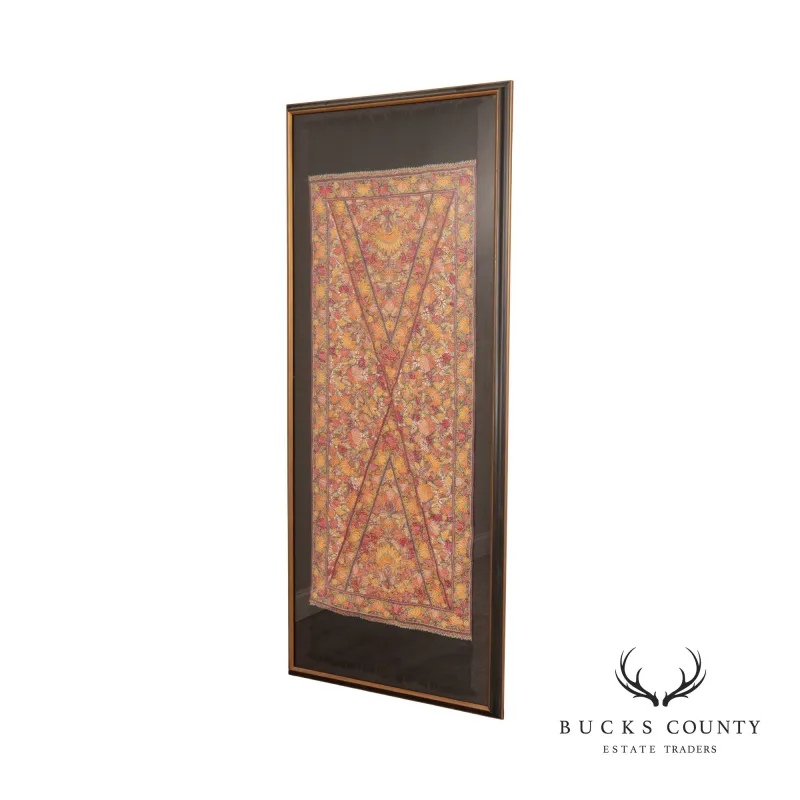
A finely woven Kani shawl laid across the back of a sofa in a formal sitting room invites guests to settle in and look closely. A Kashmiri chain-stitch dhurrie beneath a dining table grounds the room in warmth and texture, prompting questions about the bold botanical motifs underfoot. A pashmina throw positioned near a reading chair communicates an ease and refinement that no synthetic alternative can approximate — and when a guest lifts it and feels its impossible softness for the first time, the evening takes on a different quality entirely.
The principle, in each case, is the same: place the piece where it will be encountered naturally, not presented formally. The goal is discovery, not exhibition.
Sophistication as Shared Experience
American entertaining culture has shifted considerably over the past decade. The formal dinner party of an earlier era — governed by rigid protocols and a performance of effortless perfection — has given way to something more intimate and intellectually generous. Today's most admired hosts are not those who impress with scale or expense, but those who create conditions for genuine connection.
Kashmiri textiles are unusually well-suited to this contemporary ideal. They carry no pretension; they reward curiosity rather than punishing ignorance. A guest who knows nothing of the Mughal influence on Kashmiri floral motifs is not excluded from the conversation — they are welcomed into it. The textile becomes a shared point of departure, accessible to everyone in the room regardless of background.
This democratizing quality is one reason that collectors increasingly speak of their Kashmiri pieces not as possessions but as presences — objects that contribute something to the atmosphere of a room rather than simply occupying space within it.
Acquiring With Intention
For the host who wishes to bring this kind of depth to their entertaining spaces, the acquisition process itself merits the same deliberateness that governs placement. Authentic Kashmiri textiles — whether hand-knotted carpets, embroidered shawls, or woven throws — are distinguished from their imitations by a combination of material, technique, and provenance that requires some education to recognize.
Seeking out pieces with documented origins, understanding the difference between hand-embroidered and machine-printed surface decoration, and learning to recognize the characteristic irregularities of genuine handwork are all part of building a collection that will hold both its beauty and its conversational value over time. A piece acquired with care and knowledge carries that care within it — and a perceptive guest, running their fingers along a border of genuine Sozni embroidery, will sense it.
The rooms we create for others reveal something essential about how we understand the world. In choosing to fill those rooms with objects of genuine cultural depth and extraordinary craft, the discerning host offers their guests something rarer than a fine meal: the experience of encountering beauty that has a history, a geography, and a human story woven into every thread.